Duality
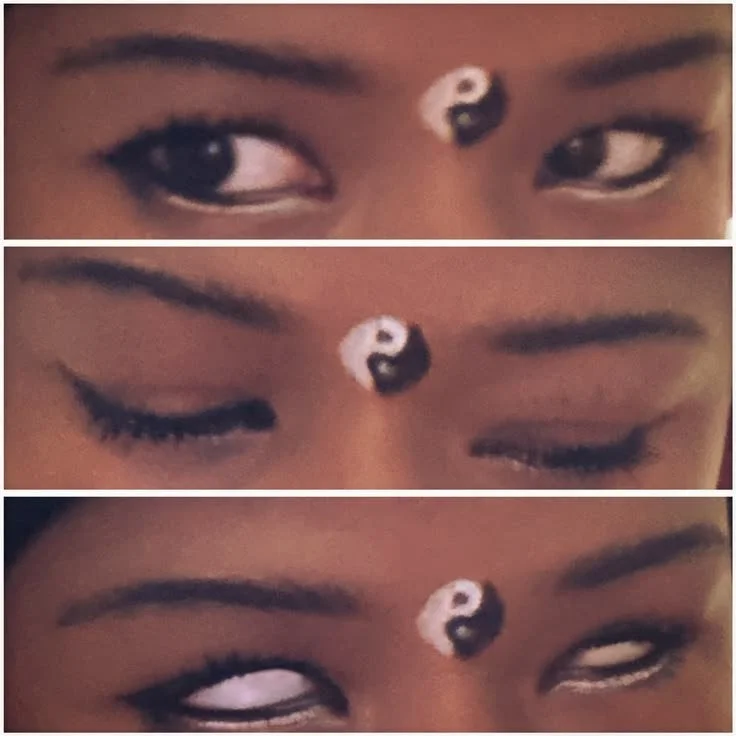
Source: Pinterest
The condition of being twofold, or having two distinct, often opposing parts or aspects.
In ancient agrarian societies, goddess worship reflected the importance of fertility, creation and the cycles of nature. Male deities grew more prominent circa the Bronze Age. Ancient goddesses recorded by name: Isis, Inanna, Tiamat, Neith, Sekhmet and Hathor. The goddess as a counterpart to her male spouse.
At the center of feminine psychology is the relationship between the physical and spiritual self, where seemingly opposing forces exist as parts of the same whole (Pinkola Estés). The locust betwixt worlds.
Mother Destroyer
Soul and psyche
Wild and woman
Duality offers a way to understand these opposing forces through the life-death-life cycle. A woman developing a relationship with her wildish nature becomes central to individuation, bringing seemingly contradictory aspects of the self into harmony.
“In a single human being there are many other beings, all with their own values, motives and devices…Rather than corrupt her natural beauty, our work is to build, for all these beings a wildish countryside, wherein the artists among them can make, the lovers love, the healers, heal. But what shall we do with those inner beings who are quite mad and those who carry out destruction without thought? Even these must be given a place, though one in which they can be contained. One entity in particular, the most deceitful and most powerful fugitive in the psyche…the natural predator.”
The medial narrator
The High Priestess (veiled) and the Empress (unveiled)
La Sirène
Paradox is the chaotic good.